
Blog Layout
Stable Housing: Good Health, Family Wealth and Better Education
CCCLT's Executive Director Julius E. Kimbrough, Jr. writes about the value of affordable, quality housing
American families and policy makers are simultaneously facing national public health, criminal justice reform and global economic issues. National, state and local leaders need to look at using our tax dollars to make thoughtful investments in our cities and communities that can not only address one societal need, but can also positively contribute in multiple ways.
Look no further than affordable, quality housing; something our city is severely lacking. The Greater New Orleans Housing Alliance estimates that the City of New Orleans currently needs 33,000 additional affordable housing units. More than 60 percent of renters in the city are cost burdened, meaning they spend more than 30 percent of their income on housing, and 35 percent are severely cost burdened, spending more than 50 percent on housing. It’s forcing more and more families, who have lived in New Orleans for many generations, to move out of the city. And researchers tell us that New Orleans lost 671 affordable housing units over the last two years.
Stable housing is the strongest predictor or social determinant of good health, growing family wealth and increasing educational outcomes for American families. Unfortunately the reverse is also true. For housing advocates, this isn’t a new concept and there are decades of research and a continuously growing body of literature
that affirms that if a family has affordable, stable, good quality housing that it increases their chances of doing better in school, employment, and better overall health.
We’ve known this for a long time at Crescent City Community Land Trust (CCCLT) and it’s why our vision for New Orleans is to help create a resident-led city where every New Orleanian can afford to live, work, and thrive in a community of their choice for generations to come. We pursue this vision through the community land trust (CLT) model of affordable housing, which entails permanent affordability coupled with stewardship and community building.
All government and academic research (and common sense) illustrate that the use of our tax dollars in affordable housing promotes life stability and is also an indirect, positive investment in people’s education, employment and wealth development and health:
● “Low income children who switch schools frequently due to housing instability or homelessness tend to perform less well in school, have learning disabilities and behavioral problems, and are less likely to graduate from high school.” (Voight, Shinn, & Nation, 2012)
● “…residents reported that the stability of rent payments allowed them to develop intentional strategies for employment and advancement.” (Carolina Reid, 2018)
● “Access to affordable housing promotes health and well-being and reduces hospital visits” (Thomas Kottke, MD, MSPH)
It’s clear that making affordable housing more available will help people in numerous ways, but too many of our current efforts at creating affordable housing have an expiration date. These efforts represent what we in the community land trust world call “temporary affordability.” For example, most affordable rental units in New Orleans are developed using a tax credit program that creates 15-30 years of affordability. In 2017, after 15 years of taxpayer financed affordability, the American Can apartment building on Bayou St. John kicked out 50 low-to-moderate income families. Consequently, New Orleans lost 50 affordable units that year and the Bayou St. John neighborhood lost some of its socio-economic diversity (and likely some racial diversity given how closely linked income and race are in Louisiana).
On the affordable homeownership front, single family homes purchased with taxpayer-funded soft second mortgages help families buy homes, move into areas they might not otherwise be able to afford, and can help grow a family’s wealth. Nonetheless, after the ten-year affordability compliance period ends with a soft second mortgage and/or after the that family sells the home, the affordability also goes away, and we as taxpayers must then fund another soft second mortgage to maintain the total number of affordable units in our community. Assisting low-to-moderate income families in growing their wealth, however, is an excellent reason for taxpayers to continue supporting the use of soft second mortgages. And we taxpayers should also want more alternative, potentially permanent and possibly more efficient tools available to create quality, affordable housing within the public policy toolbox.
CCCLT’s mission is to ensure permanent affordability in housing and commercial spaces for generations to come through equitable residential and commercial development, land stewardship, and housing advocacy. CCCLT single family homes, such as the two we have sold in the Lower 9th Ward over the past six months, remain affordable because the CLT owns the land the homes sit on--leasing it in perpetuity to the family that buys the house--so when that family sells the house to the next family, the land trust can maintain an affordable price even while surrounding property values rapidly increase.
We sometimes refer to our single family CLT homes as “single family affordable condominiums” because we all know in a condo situation, the condo owner does not own the entire building – they only own their part of the building. Similarly, by holding onto the land, the CLT is co-owner with the homeowner, keeping prices low for generations. Just like in a traditional homeownership situation, the CLT homeowner can gain wealth and more equity in their home over time while also helping maintain the neighborhood’s affordability. When CCCLT acts as a co-developer as we did with the Pythian building in downtown New Orleans, we enter into agreements that allow the land trust to offer permanently affordable rental units and stewardship or community building services for generations to come.
CCCLT’s model fosters community resilience through community building, stewardship and affordability; we also make certain that our developments are conceived with transit concerns, energy efficiency and physical resilience in mind as we all face global climate change. The Pythian building is adjacent to the city’s main transit hub and the building itself is designed to promote bicycle usage through the provision of 50 internal bicycle stations, a bike wash and shower facilities specifically for bicycle users. Energy efficiency features within the building also mean that it uses approximately 50% less utilities than comparable structures. In our single family home developments – wherein we share control of the land with our homeowners – CCCLT is now exploring the possible co-location of neighborhood scale water retention features with input from researchers at MIT and Tulane University.
In line with our theory of change, CCCLT is taking the community land trust model in new directions to better serve New Orleanians on the multi-family and commercial front. CCCLT is now identifying potential partners – families and small real estate owners - who own land or dilapidated structures in the inner core communities where we are focused (available real estate is a precious and expensive commodity in the gentrifying communities where CCCLT works).
We are offering these families our technical expertise, resources and capital to potentially develop new, permanently affordable community assets and amenities. Thus the CLT model can become a wealth building strategy for a broader cross section of the community, not just wealth building through single-family CLT home ownership. Our first partner with this demonstration program is the Vaucresson family, who operate a 120-year old, African-American-owned business now in its fourth generation of making their traditional Creole sausage product. CCCLT is helping the Vaucresson family re-establish their presence in the 7th Ward neighborhood of New Orleans where the company was founded; their storefront having been shuttered since Hurricane Katrina. In addition to creating a new retail amenity in the 7th Ward community, CCCLT will also create two permanently affordable apartments above the Vaucresson family business. CCCLT is actively working around New Orleans to implement strategies that will slow and reverse growth in the racial wealth gap.
When city, state, and local governments spend public money on housing, they are also investing in employment, family wealth and public health. So, when they are making these types of vital societal investments, shouldn’t we as tax payers also want our decision makers to fund permanent affordability coupled with stewardship and community building that will benefit future generations?
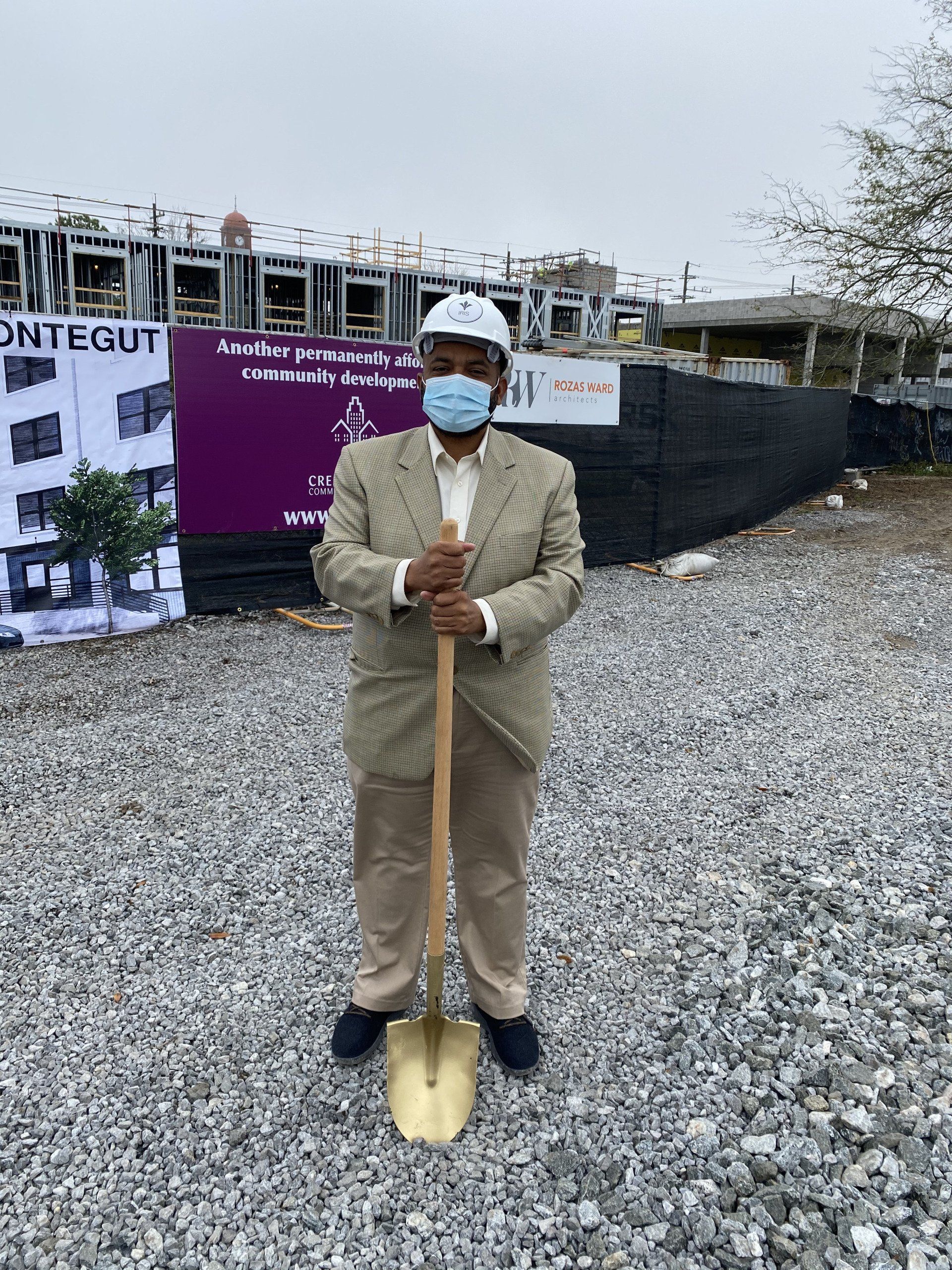
In all three of these endeavors, CCCLT acts as equity investor and finds a development partner to advance the project. By focusing on Black-owned businesses and incorporating housing into the mix, CCCLT ensures that these communities continue to thrive. Full article
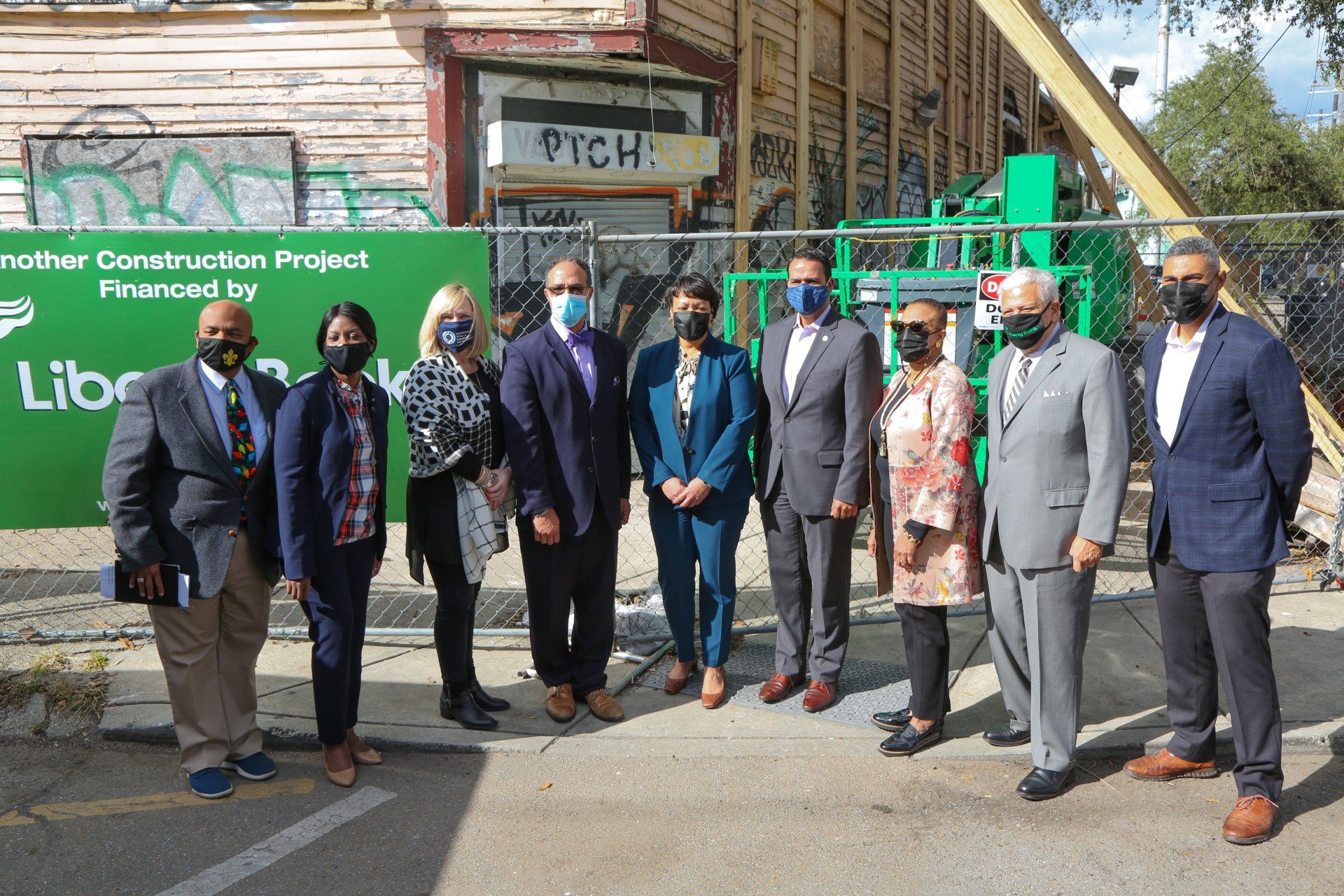
“When we talk about the CLT model to African Americans we have to be cognizant of the history of African Americans in this country,” says Kimbrough. “They’re thinking about redlining, they’re thinking about situations where African Americans have historically been deprived of the opportunity to gather capital, save capital, invest in real estate or own real estate. And that’s a very reasonable question. So we have come up with answers to those questions about why the model is applicable to African Americans and valuable to African Americans, why it’s important to create commercial spaces serving low- and moderate-income people for perpetuity in these gentrifying neighborhoods beyond affordable homeownership.” Full article

NEW ORLEANS — The Mayor’s Office today announced an expansion of its rental assistance program with the recent allocation of funding from the State and Federal government. The City of New Orleans received a direct initial allocation of $11.6 million from the U.S. Treasury to provide rental assistance. The City is expecting an additional $14 million from the State of Louisiana for rental assistance. This program will go live on Feb. 15, 2021 and will begin taking applications through its NOLA Ready website -- https://ready.nola.gov -- as well as in person. People can also call (504) 658-4200 to apply and for any questions. In an unprecedented effort to meet people where they are, the City is partnering with the courts to ensure any household facing imminent eviction for nonpayment of rent is immediately connected to rental assistance resources. The following are a list of qualifications in order to apply for the program: · Families earning 60% or below of the area median income (AMI) · Assistance can cover up to 12 months of back rent and three months of future rent payments under limited circumstances · Landlords that accept these funds will not be able to evict tenants for 180 days without good cause The following are frequently asked questions and answers about the program: *This FAQ will be posted to ready.nola.gov and updated pending federal updates from the U.S. Treasury. Does the money go to renters or landlords? In almost all circumstances, the payment will go directly to landlords. Federal rules provide that if a landlord chooses to refuse to participate in the program, a renter can still apply, however. What is the time period? The program launches Feb. 15 and will be live until funding runs out. As a landlord, does this mean I can’t ever evict tenants that are covered under this program? Landlords that accept these funds will not be able to evict tenants for non-payment of rent for 90 days. Exceptions include illegal activity or abandonment. Landlords that accept these funds will not be able to evict tenants without good cause for 180 days. Good cause means something the tenant did or failed to do, including nonpayment of rent (should the moratorium expire), other lease violations, criminal activity, property damage, and activity that threatens the health, safety, or peaceful possession of others. Can landlords apply directly? Yes Do undocumented people qualify for assistance? There is nothing barring undocumented people from qualifying for assistance. What about landlords who are in danger of foreclosure? Landlords who have missed a payment or are concerned about foreclosure should immediately contact free, HUD certified housing counseling by dialing (800) 569-4287 and may apply for assistance through the Small Landlord Emergency Rental Assistance Program. The Mayor’s Office will send out additional information on this program pending updated federal guidance from the U.S. Treasury. # # #
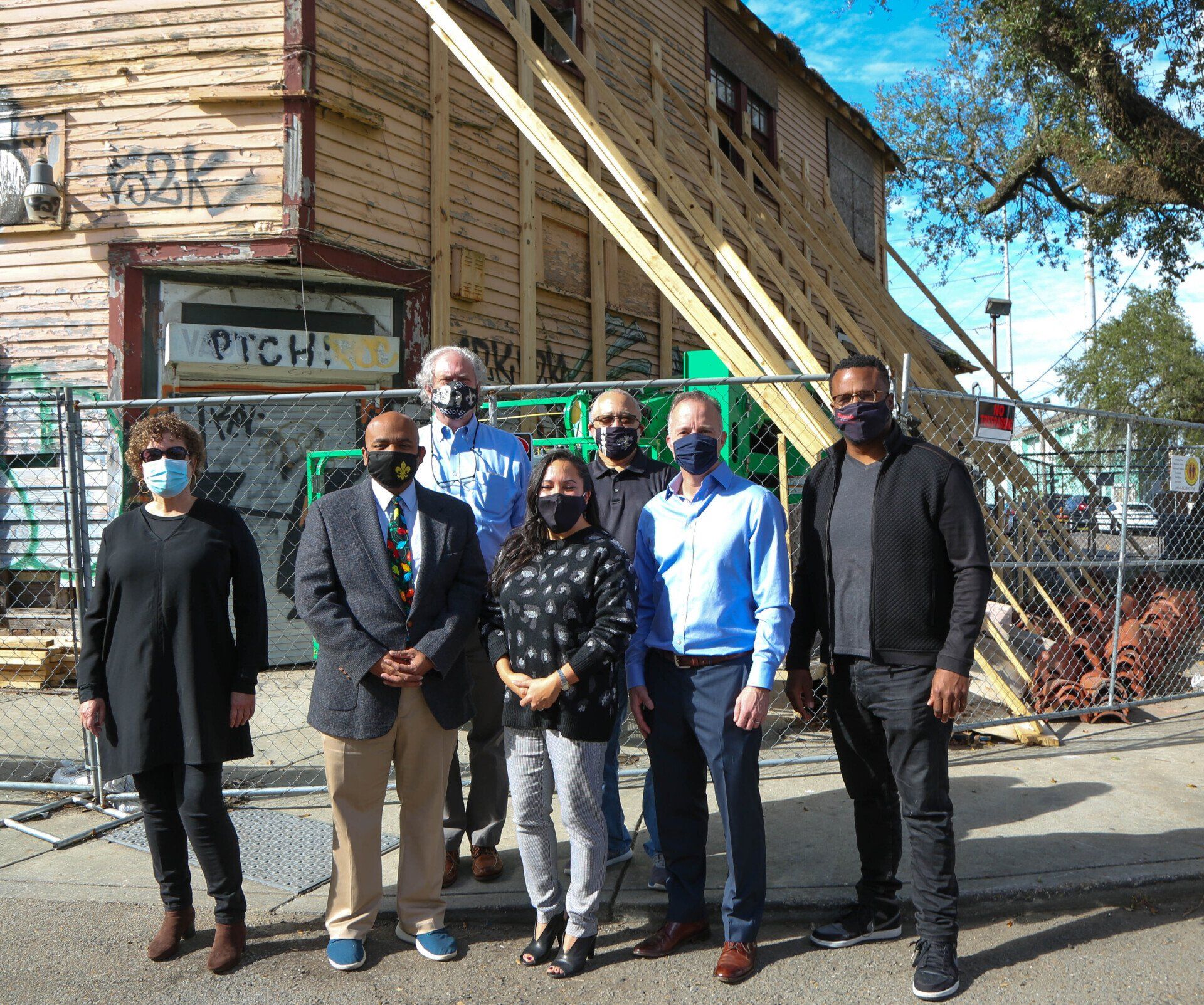
Juicy, peppery-shot links from Vaucresson Sausage Co. are an integral part of local family recipes, restaurant menus and the annual food lineup for the New Orleans Jazz & Heritage Festival. Vance Vaucresson, the keeper of his family’s brand, wants to make the company an integral part of Seventh Ward neighborhood life again. This week marked a milestone on that quest. Work is now underway to redevelop the longtime home of Vaucresson Sausage on the corner of St. Bernard Avenue and North Roman Street. Full article
In the most recent issue of the American Planning Association Magazine, public policy reporter Dan Vock spoke with CCCLT Executive Director Julius Kimbrough Jr. about CCCLT's work and sustainable affordability in New Orleans. Sustainable affordability Julius Kimbrough, the executive director of the Crescent City Community Land Trust (CCCLT) in New Orleans, says his organization is also growing despite the pandemic. It has offered homes for sale in the Lower Ninth Ward, a predominantly Black area of th e city, and helped support local businesses and mixed-use developments downtown. Their goal is to put affordable housing and commercial spaces in areas of significant economic development and opportunity. The organization was started in 2011, when “families that had lived [in New Orleans] for many generations [were] being priced out of the city, where institutional racism had already been practiced for multiple generations,” CCCLT’s website says. The city saw a wave of investments in affordable housing after the devastation of Hurricane Katrina in 2005, but that stock isn’t permanent. Affordable housing programs like the Low-Income Housing Tax Credit require developers to offer affordable housing for 15 or 30 years, after which time they can charge higher rents or sell the development. Normally, that effect is hard to notice, but with so many projects starting in Katrina’s aftermath, “there’s going to be a lot of temporary affordability lost in a tight window,” Kimbrough says. That’s where CCCLT can really make a difference. “We’re trying to get ahead of that by creating permanent affordability, so that these units will always be affordable to those who need them,” he says.

The Center for Community Investment has selected Crescent City Community Land Trust Executive Director Julius Kimbrough Jr. to be a 2020-21 Fulcrum Fellow. Kimbrough joins a class of 15 others, who were chosen because of their work in housing, philanthropy, and economic and community development to spark more resilient, equitable communities. “This is quite an honor to be included in this group, which is made up of many talented and impressive people with amazing experiences,” says Kimbrough. “I’m really looking forward to connecting with the other fellows, and learning new skills in order to better tackle the many housing and community development challenges our city faces.” The year-long fellowship will include in-person trainings, forums and classwork focused on adaptive leadership and community investment; racial equity; the capital absorption framework, and leadership styles.
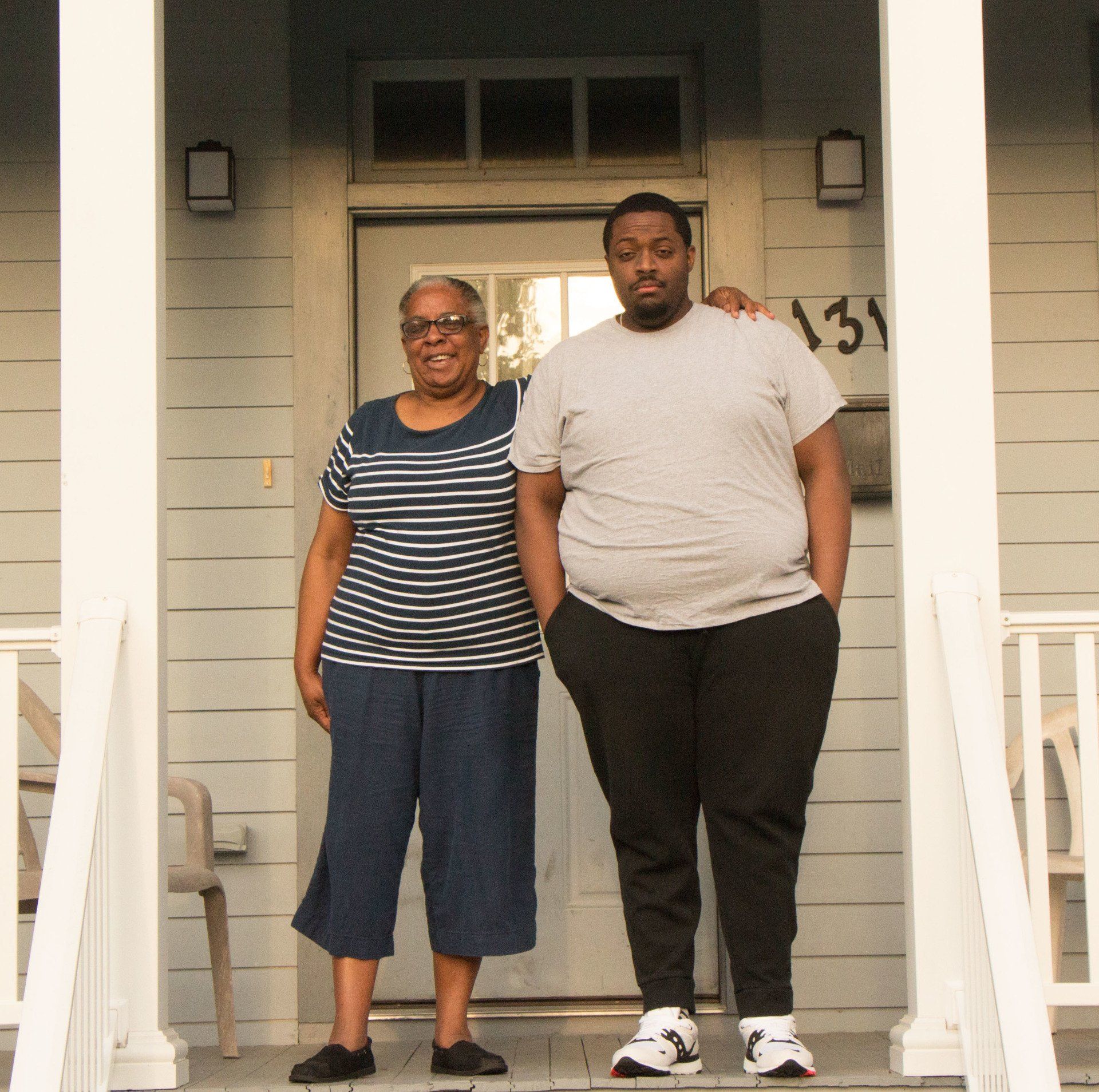
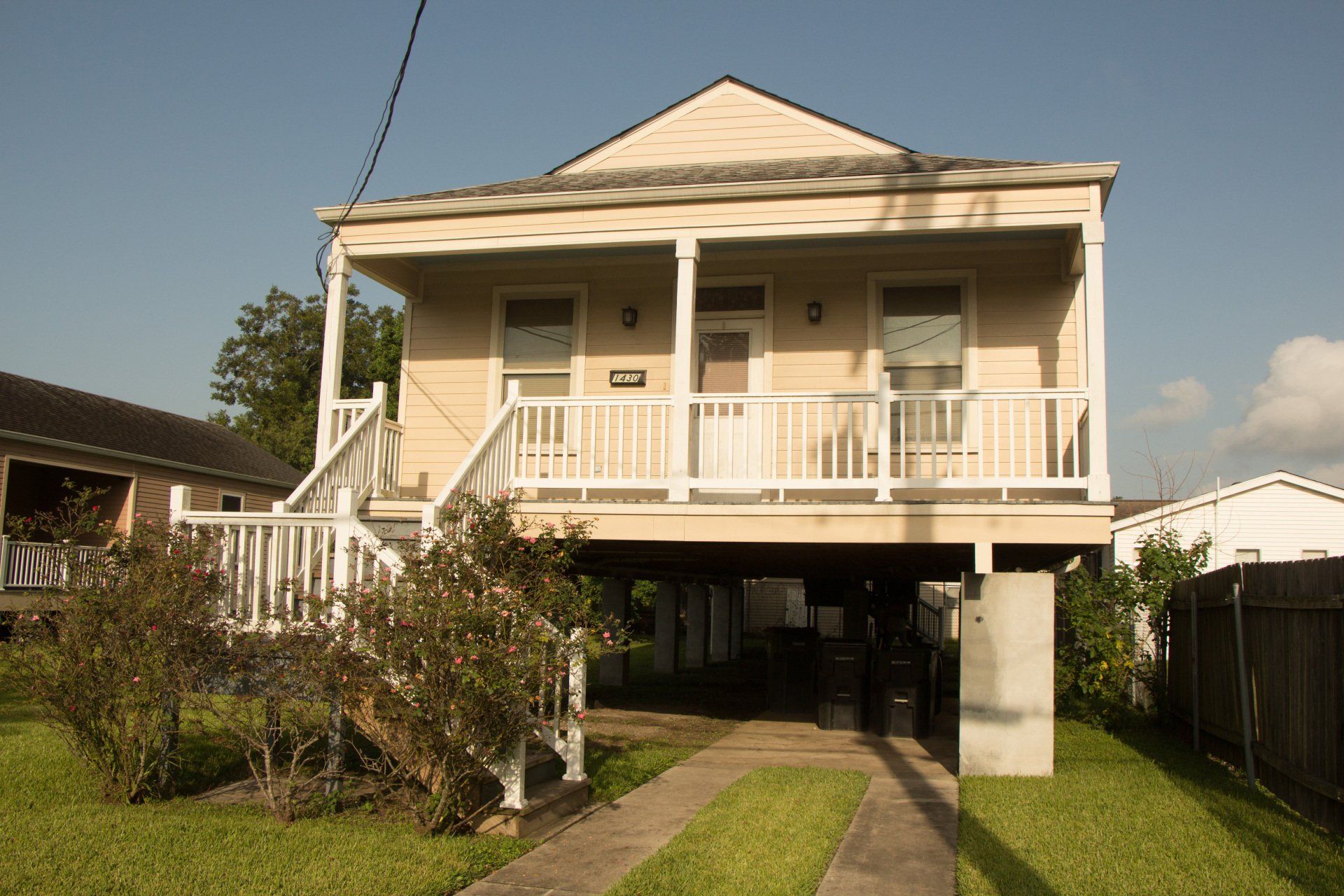
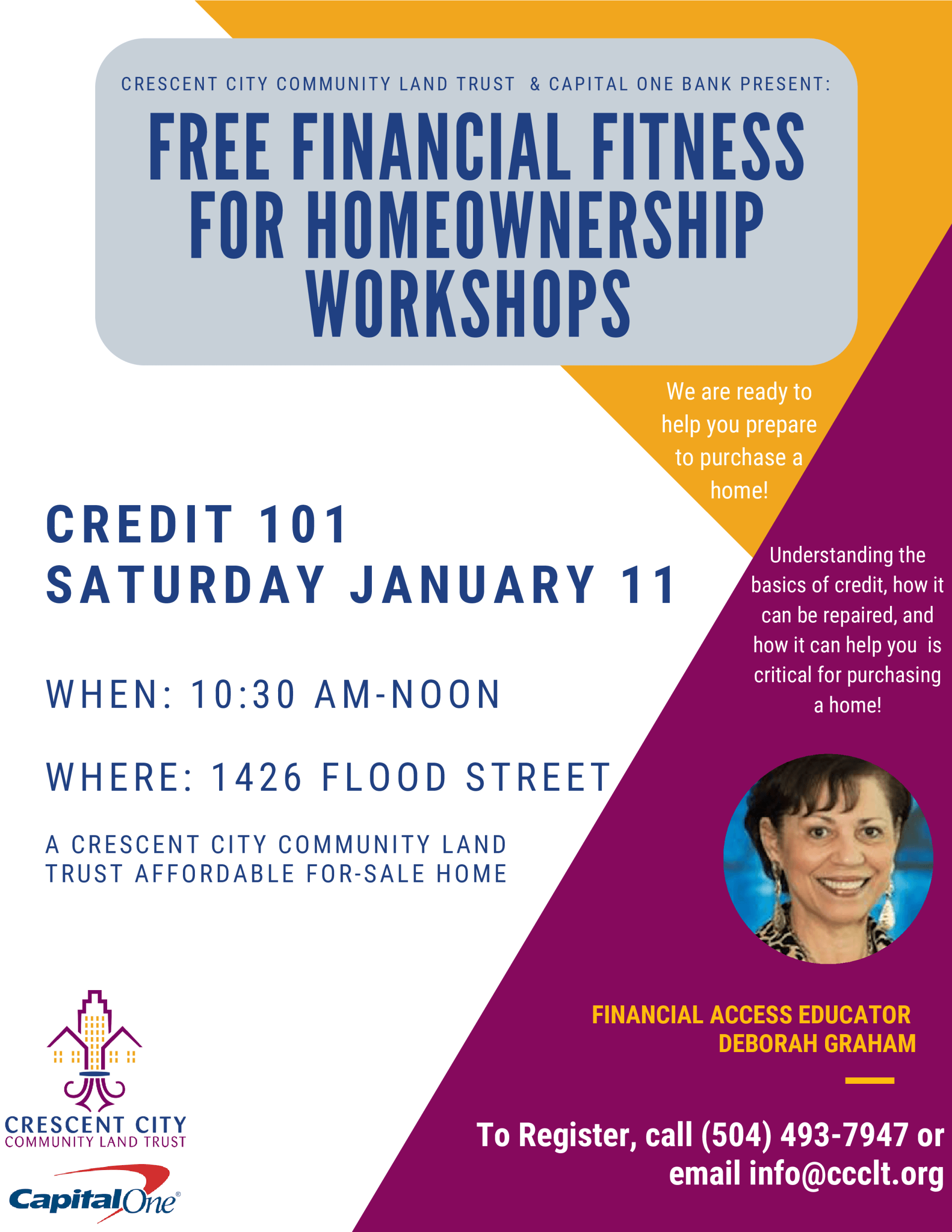
Crescent City CLT’s latest community land trust single family home buyer Bradley Henderson sees his purchase as a springboard to entrepreneurialism and starting his own small business. “I want to go to barber school,” says 27-year old Henderson. “Now that I’ve bought this house, I have the time to do that.” Henderson closed the purchase of the three bedroom/two bathroom on Flood Street in the Lower 9th Ward this past May. He and his mother, Dinah, have lived in the home for six years as renters, and because of the subsidy in the home, his monthly mortgage note (including insurance and taxes) is significantly lower than what they used to pay in rent. “It went down a couple of hundred bucks,” Henderson says. Other community land trust homeownership benefits now enjoyed by the Henderson’s include building their family wealth as they pay their mortgage each month and the stability of their fixed, 30-year mortgage from Hope Credit Union, which won’t increase like rent. Dinah Henderson points out that this is the first house the family has owned in a long time. The Henderson home on Flood is one of several that CCCLT has available in the Lower 9th Ward now, and depending on the buyer’s income, mortgage payments will range between $400 and $800 per month. Buying a community land trust home does require a time commitment and learning the fundamentals of homeownership. As part of his process, Henderson attended training classes provided by CCCLT’s trusted partner Neighborhood Development Foundation (NDF) , and he enjoyed the experience because it removed the mystery behind homeownership. “NDF broke everything down for me about appraisers, real estate agents, lenders, realtors and getting my credit straight,” Henderson says. With his new knowledge and home, Henderson feels it’s time to move on toward his dream of becoming a small business owner and barber. “I’m not paying rent on this house; I own it and that’s been the goal,” Henderson says. “This has opened up a lot for me.” FIND OUT MORE ABOUT CCCLT'S LOWER 9 HOMES!
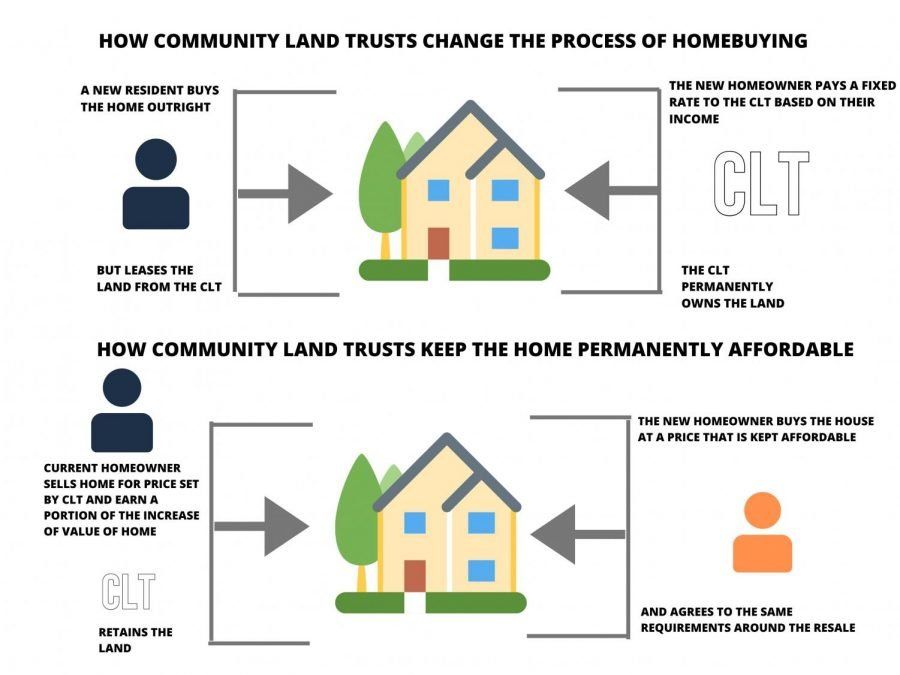
“The majority of affordable housing options we see in the city are temporary. All government subsidies have a compliance period or time frame during which the properties must be made affordable. Through the community land trust model all subsidies are kept in the property and pursue long-term affordability,” said executive director of Crescent City Land Trust, Julius Kimbrough. Read more here.
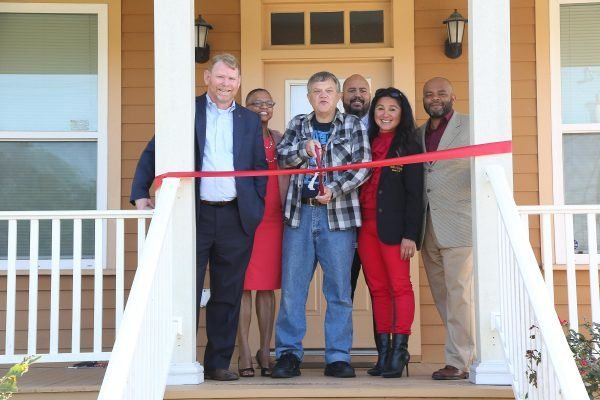
The first home has been sold in a plan to make affordable housing available to more New Orleanians. City officials and local business leaders gathered in the Lower Ninth Ward on Wednesday to commemorate the community land trust home sold at 1325 Alabo St. Read more here.